
-1.png)
EtonHouse Singapore
April 2026
Share This Article
"I just can't get my child motivated."
It's a concern many parents share.
Whether it's homework, practising an instrument, tidying up, reading, or trying something new, it can be frustrating to watch a child resist getting started or give up at the first sign of difficulty. In response, adults often reach for encouragement, rewards, reminders, or consequences, hoping to spark motivation into action.
But what if we've been thinking about motivation the wrong way?
As explored during our recent EtonHouse Parenting Webinar, Building Motivation That Lasts: From "Do I Have To" to "I Want To", motivation is rarely the starting point. More often, it is the outcome of experiences that help children feel capable, connected, and trusted. Rather than asking, "How do I motivate my child?", it may be more helpful to ask:
What conditions help motivation grow?
When motivation seems to disappear
It is easy to look at a child who eagerly pursues a personal interest and assume they are naturally motivated. Yet the same child who spends hours building, creating, practising, or researching a favourite topic may resist starting homework or completing a household responsibility. The difference is not usually motivation itself. It is often the child’s relationship with the task.
When children willingly engage in something, they typically experience a sense of competence, ownership, curiosity, or a sense of meaning. They believe they can succeed, feel invested in the process, or understand the purpose behind what they are doing. When those conditions are absent, motivation often appears to disappear as well.
This is why resistance is worth understanding more carefully. What adults interpret as avoidance or defiance may actually be communication. A child who resists starting a task may be expressing fear of getting it wrong, uncertainty about where to begin, a lack of confidence, mental or emotional overload, or a need for connection and reassurance.
From the outside, these experiences can look very similar. A child who says “I don’t want to” may actually mean, “I’m worried I can’t do it”, “I don’t know where to start”, or “This feels overwhelming.” When we shift from judging the behaviour to becoming curious about the experience behind it, our responses often change too. Instead of pushing harder, we begin supporting more effectively.
Confidence comes through experience
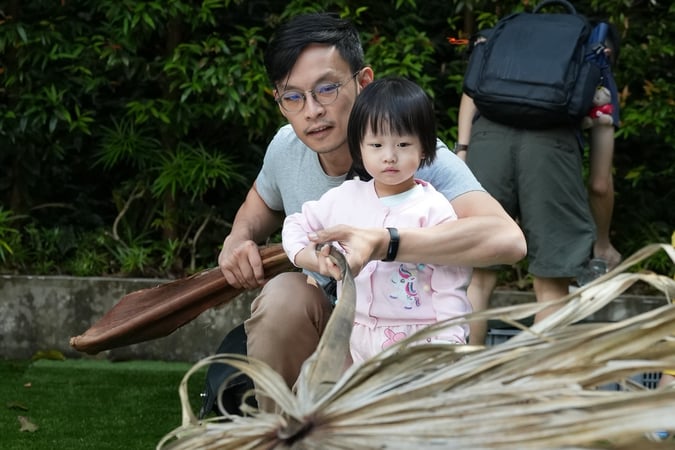
Many adults wait for children to feel confident before encouraging them to take on a challenge. Yet confidence rarely works that way. More often, confidence is built through experience. A child develops confidence by attempting something difficult, discovering they can manage it, and carrying that experience forward into future challenges.
This is why making the first step feel manageable matters. When adults break tasks into smaller parts, offer reassurance without taking over, and create opportunities for early success, children are more likely to engage. Over time, these experiences become evidence: “I have done hard things before. I can figure things out. I know what to do when something feels difficult.”
As parents and educators, it is natural to want to protect children from frustration. Yet some degree of struggle is necessary for growth. Children do not develop perseverance by avoiding difficulty. They develop it by experiencing challenges within supportive relationships.
This does not mean leaving children to struggle alone. Rather, it means being present without removing every obstacle. When adults step in too quickly, we may unintentionally communicate, “I don’t think you can do this without me.” When we stay nearby, offer encouragement, and allow children to work through manageable challenges, we communicate something different: “I believe you can do this.”
The distinction is subtle, but powerful. Motivation grows when children begin to see themselves as capable of meeting challenges rather than avoiding them.
From compliance to ownership
Perhaps the most significant shift in motivation happens when children move from doing something because they have been told to, towards doing something because it matters to them. This is where agency becomes important.
Children are more likely to engage when they experience genuine ownership over aspects of their lives. That ownership might look like taking on a responsibility at home, caring for a pet or plant, organising school materials, contributing to family routines, or making decisions about how to approach a task.
These opportunities communicate trust, and trust has a remarkable effect on motivation. When children feel trusted, they begin to trust themselves. They start to see themselves as capable contributors rather than passive recipients of adult direction.
The goal is not perfect independence. The goal is to gradually build the confidence that says, “I can do this.”
Motivation grows in relationships
.jpg?width=675&height=451&name=2%20(2).jpg)
Perhaps the most important takeaway from the webinar is that motivation is not something we can manufacture through rewards, reminders, or pressure. It develops through relationships, experiences, and repeated opportunities for children to see themselves as capable, valued, and trusted.
Children become more willing to engage when they feel understood. They become more resilient when they know struggle is a normal part of learning. They become more self-directed when they experience trust, ownership, and meaningful responsibility.
The journey from “Do I have to?” to “I want to” rarely happens through a single conversation or strategy. It happens through hundreds of everyday moments that help children develop confidence in themselves and their ability to contribute, learn, and grow.
Discover how EtonHouse nurtures curiosity, confidence, agency, and a lifelong love of learning through meaningful relationships and inquiry-driven experiences. Book a school tour to learn more about our approach.
Additional Resources
You may also find these resources helpful:
- Drive: The Surprising Truth About What Motivates Us by Daniel H. Pink
- The Self-Driven Child by William Stixrud and Ned Johnson
- Mindset by Carol S. Dweck
- Carol Dweck's TED Talk: The Power of Believing That You Can Improve
- Self-Determination Theory (selfdeterminationtheory.org)
Discover how EtonHouse nurtures curiosity, confidence, agency, and a lifelong love of learning through meaningful relationships and inquiry-driven experiences.