-1.png)
EtonHouse Singapore
April 2026
Share This Article
How can parents guide behaviour while supporting children’s emotional growth and independence at the same time?
This question shaped our recent EtonHouse Parenting Webinar on positive behaviour guidance, where educators shared practical ways families can move beyond discipline focused on punishment and instead nurture long term social and emotional skills.
The session explored how parenting approaches are evolving. Rather than seeking immediate compliance, positive behaviour guidance helps children build the ability to manage emotions, make responsible decisions, and develop independence over time.
Understanding behaviour differently
One key takeaway from the webinar is that challenging behaviour is often a form of communication. Instead of simply trying to stop the behaviour, parents can look for what the child may be expressing or needing in that moment.
Fatigue, frustration, hunger, or difficulty expressing feelings often sit beneath behaviour that appears disruptive. When adults respond with empathy and consistency, children feel safe enough to learn healthier ways to cope and communicate.
Building independence through routines and choices
Predictable routines give children a sense of security, while offering simple choices supports growing independence. Small decisions, such as choosing between two outfits or selecting a bedtime story, allow children to practise decision-making within clear and supportive boundaries.
A strong parent-child relationship remains central. When children feel emotionally secure, they are more willing to cooperate, explore, and learn from mistakes.
Everyday strategies that make a difference
During the webinar, educators also shared practical ways parents can encourage positive behaviour at home:
- Give genuine, specific praise that recognises effort and progress
- Model calm and respectful communication
- Express your own feelings honestly and constructively
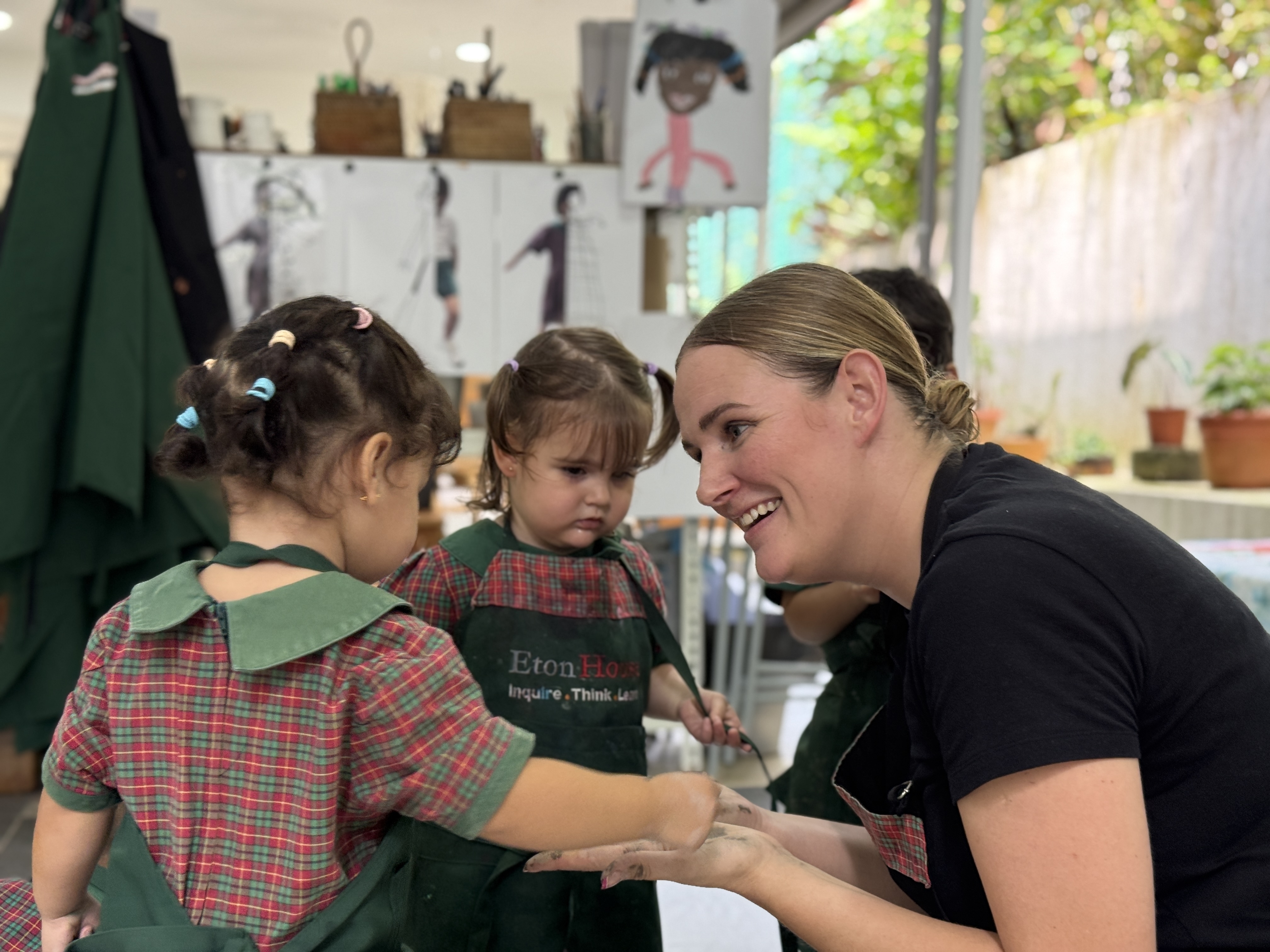
- Get down to your child’s eye level when speaking
- Offer limited choices to reduce power struggles
These approaches strengthen connections while guiding behaviour in constructive ways.
Supporting lifelong skills
Positive behaviour guidance aligns with what research and high-quality early childhood education emphasise: emotional development, resilience, and social competence are foundations for lifelong learning.
When children learn to navigate emotions and relationships early, they are better equipped to handle future challenges. And when family interactions focus on connection rather than conflict, daily life becomes calmer and more enjoyable for everyone.
At EtonHouse schools, our Reggio Emilia-inspired environments place relationships, emotional well-being, and respectful guidance at the centre of learning. Children experience consistent support in developing independence, confidence, and social skills, reflecting the same positive behaviour approaches shared in the webinar.
- Encouraging positive behaviour: tips - raisingchildren.net.au
- Nurturing Early Learners (NEL) Framework - Ministry of Education (MOE)
- Respectful Parenting book - EtonHouse Community Fund (ECF)
Discover how our Reggio Emilia-inspired learning environment supports your child’s emotional growth and development.