
Rachael Blacklaws
Originally from the UK, Rachael started teaching in 2014 after studying History at University College London. She has worked in schools in Japan, Korea, China and India, teaching ESL, History and Politics. She has an MA in TESOL and Applied Linguistics and experience as a Head of EAL and Pastoral care coordinator. Rachael believes in creating lessons which engage each student and foster a sense of curiosity about the world around us and how history can help decode what we see.
Share This Article
What does it truly take to craft a successful university application today? With competition growing each year, strong grades alone are no longer sufficient to stand out. Universities are seeking students who not only achieve academic excellence, but also demonstrate curiosity, initiative, and a clear sense of purpose in their next steps.
Hear from our Academic and Career Counsellor at EtonHouse International School Orchard, Rachael Blacklaws, who shares her insights into what admissions teams are genuinely looking for, and how your child can prepare with clarity and confidence. From building a compelling personal profile to making thoughtful subject choices and selecting meaningful co-curricular commitments, these practical strategies will help lay a strong foundation for a smooth, successful transition into this important new phase of life.
How do top universities actually define a strong candidate today?
This is a question that varies depending on the university, the programme being applied to, and the country. Some universities place a strong emphasis on grades, both achieved and predicted, as well as external exam scores such as the SAT or TMUA. This allows them to rank or stratify large numbers of applications, which may run into the hundreds.
However, for competitive programmes in the UK and the US, universities are also looking for clear evidence of interest in the chosen subject. This can be shown through engaging with your subject outside of the classroom, such as:
-
Learning a new programming skill over the summer,
-
Engaging in wider reading,
-
Attending lectures or online webinars.
Universities also value demonstrations of skills such as communication, teamwork, research ability, and critical thinking, often shown through extracurricular activities. In the UK, this is typically conveyed through a candidate’s personal statement. In a situation where more than one application has the same grades, universities can use the personal statement to make a final decision.
Different universities and courses prioritise different qualities, and strong candidates tend to apply to programmes that align with their strengths and extracurricular experiences. For example, courses with a creative focus, such as media, film, art and design, look for evidence of passion beyond the classroom, as well as originality and creative thinking. Portfolios should reflect a student’s development and creative vision, allowing universities to see how they approach and refine their work.
Overall, most universities are seeking applicants who will succeed academically, contribute actively to lectures and seminars, and engage positively with the wider student community.
.png?width=500&height=389&name=Untitled%20Document%20(28).png)
How can students demonstrate passion for their chosen subject?
A key factor in university applications is demonstrating genuine passion for the subject you are applying for. Often, students apply for courses they have not previously studied at A-level or IB, such as Engineering, Sports Science, or Art History. In these cases, universities want to see evidence that applicants understand the nature and demands of the course, and that they have a genuine interest in the subject content.
Students can demonstrate this in a number of ways, such as internships, work experience, volunteering or summer workshop programmes. Many universities publish free subject lectures and seminars on their websites for students to watch, or give recommended reading lists on their department websites. It is also strongly encourage for students to engage in wider reading around their chosen subject. This might include books, newspapers, or academic journals. For example, a student applying to study Medicine might follow a medical journal to stay informed about recent developments, while a student interested in international relations might choose a current affairs magazine.
The key is to actively read and engage with this material so that you have something thoughtful to reflect on in your personal statement. Rather than listing everything you have read, it is far more effective to focus on one or two examples and explore them in depth. For instance, a student applying to study History might write: “Having read Africa Is Not a Country by Dipo Faloyin, I was inspired to visit the British Museum to see some of the artefacts discussed. However, this experience also prompted me to question whether my visit was, in some ways, a continuation of the cultural colonialism explored in his work.”
In this example, the student is not simply listing experiences, the book they read and the place they visited, but is instead reflecting on the connection between them and beginning to develop a deeper, more critical understanding. Students can begin preparing for this stage by keeping a reflection journal or notes which can help them when beginning to write application essays and personal statements.
Beyond rankings, what should families pay attention to when thinking about the right university fit for their child?
I often describe university rankings as the most important of the least important factors! One common misunderstanding is that rankings can vary significantly depending on what is being measured. Universities often achieve high rankings based on the quantity or quality of their academic research and published papers, not necessarily the quality of teaching, available resources, or contact time with lecturers. For this reason, I always encourage students to look more closely at course details.
Questions like:
-
What does a typical first-year schedule look like?
-
How many modules are required, and how many are optional?
-
What's the student-to-teacher ratio like?
-
How is the course is assessed?
Environment and housing are also factors that international students sometimes overlook. For example, coming from a city like Singapore, moving to a small university town such as Durham can be a significant culture shock, even if the university has an excellent reputation. For students considering the US, I often suggest thinking about practical aspects such as transport, will they need a car to get around? Lifestyle factors are equally important, as this is a place they will live for three to four years.
Ultimately, students need to think not only about gaining admission, but also about how they will succeed and thrive once they are at university. The best university is the university that is the best fit for the student.

What should students look out for in their personal statements?
There are three main pieces of advice I give students when they begin writing their personal statements.
Firstly, it should be written by the student themselves. University admissions staff read thousands of personal statements each year, and they consistently tell me they can tell when students have used AI or paid services to write their statement for them. A personal statement should be exactly that; personal. It should reflect your own thoughts, experiences, and writing style. I always advise students to avoid using AI tools or external services to write their statements.
Secondly, it is important to show rather than tell. General statements such as, “I am fascinated by computer programming” are far less impactful than explaining specifically what fascinates you about the subject and why. Do not be afraid to express genuine enthusiasm and to share your intellectual interests in detail in your statement., the person reading it will likely be a subject expert and will appreciate thoughtful detail and specificity.
The same applies when discussing extracurricular experiences: focus on the skills you developed and demonstrate them through examples. For instance, “As captain of my school badminton team, I learned leadership skills” is much less compelling than: “During my two years as captain of the school badminton team, I learned that effective leadership often meant motivating my teammates to persevere after a difficult loss.” Specific examples make your reflections far more memorable and convincing.
Thirdly, avoid trying to sound overly formal or using highly academic language that does not feel natural to you. The best tone is one that feels similar to speaking with a teacher at school: professional and respectful, but still genuine. Likewise, avoid opening with a famous quote or phrases such as “Since I was a child, I have been passionate about…”. Personal statements are usually stronger when they begin with a genuine, recent example that explains when and why you decided to pursue your chosen subject.

What role do counsellors and schools play in shaping an application?
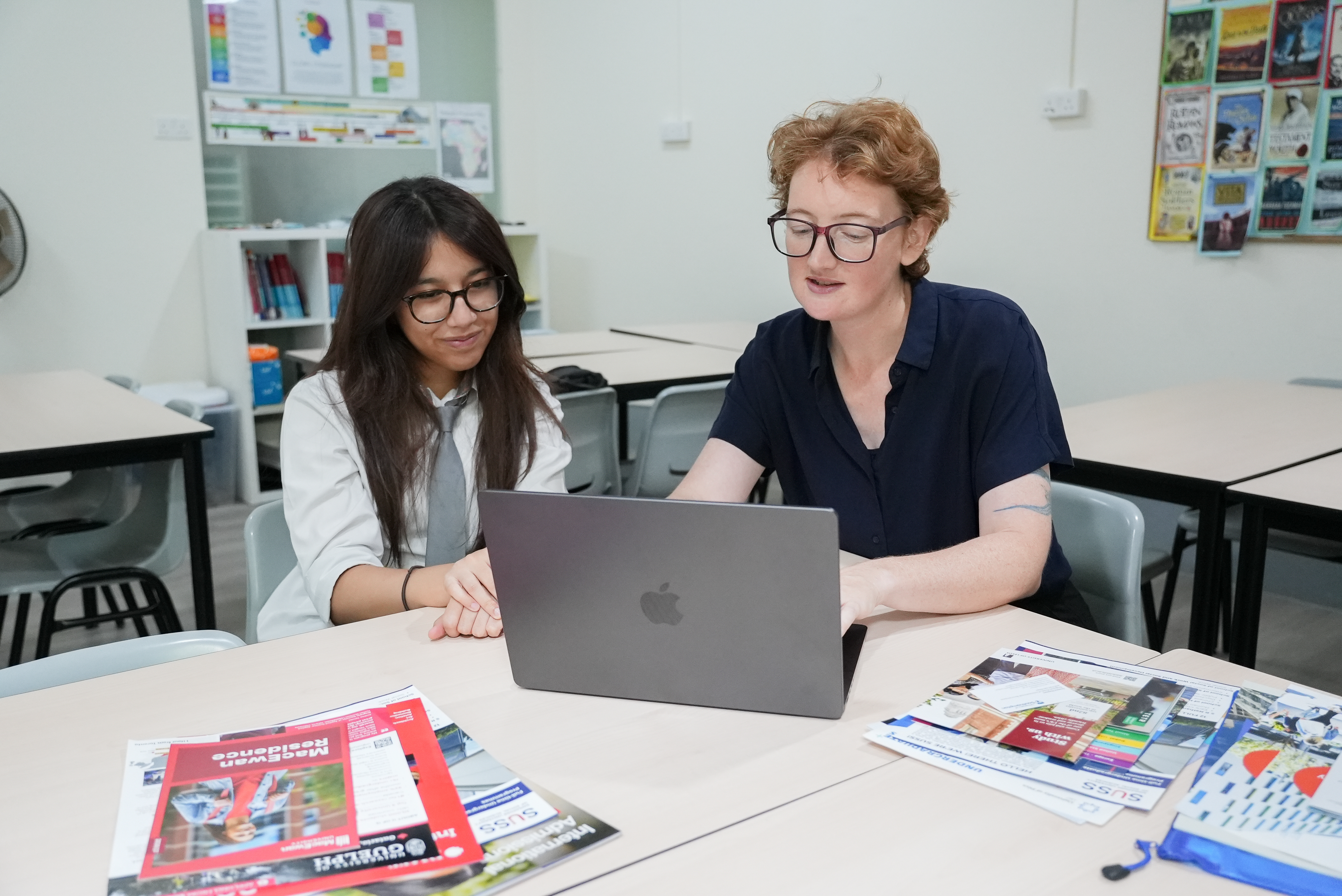
School counsellors play a very important role in supporting students through the university application process. They often have a broad range of experience and can direct students towards useful resources to help them research and refine their list of potential universities. In addition, we actively curate opportunities for students to engage directly with institutions, including organising university fairs where representatives from a diverse range of universities are invited to campus to share insights and answer questions.
Sometimes students have a misconception that counsellors are there to tell them which specific universities and courses they should apply to. Rather, their role is to offer guidance and support as students work to narrow down their options and make informed decisions. A large part of the university application process is the student researching and choosing the courses themselves, and really beginning to take ownership over their next steps.
A significant part of my role involves meeting one-to-one with students and their families to discuss next steps, timelines, and broader considerations. I spend a great deal of time helping students understand application timelines, ensuring they have researched key deadlines and are aware of what their individual application journey will look like. Counsellors can also offer feedback on application essays and personal statements, as well as helping collect additional school documents needed by the students.
It is also important to recognise that school counsellors are often supporting hundreds of applications at once. As a result, a key part of the process is encouraging students to take ownership and responsibility for their applications, this includes researching entry requirements, scholarship opportunities, and important deadlines. By fostering independence and a clear sense of direction, we aim to equip students not only to secure offers from their chosen universities, but also to thrive once they arrive there.
Ultimately, the process works best as a collaborative effort between the school, the student, and their family.
As your child approaches this important milestone, thoughtful preparation can make all the difference. With the right guidance, a clear sense of purpose, and a well-rounded profile, the university application journey becomes not just manageable, but an opportunity for growth and self-discovery.
Learn how our personalised counselling programme at EtonHouse International School Orchard supports each student in navigating their university journey with confidence.