-1.png)
EtonHouse Singapore
April 2026
Share This Article
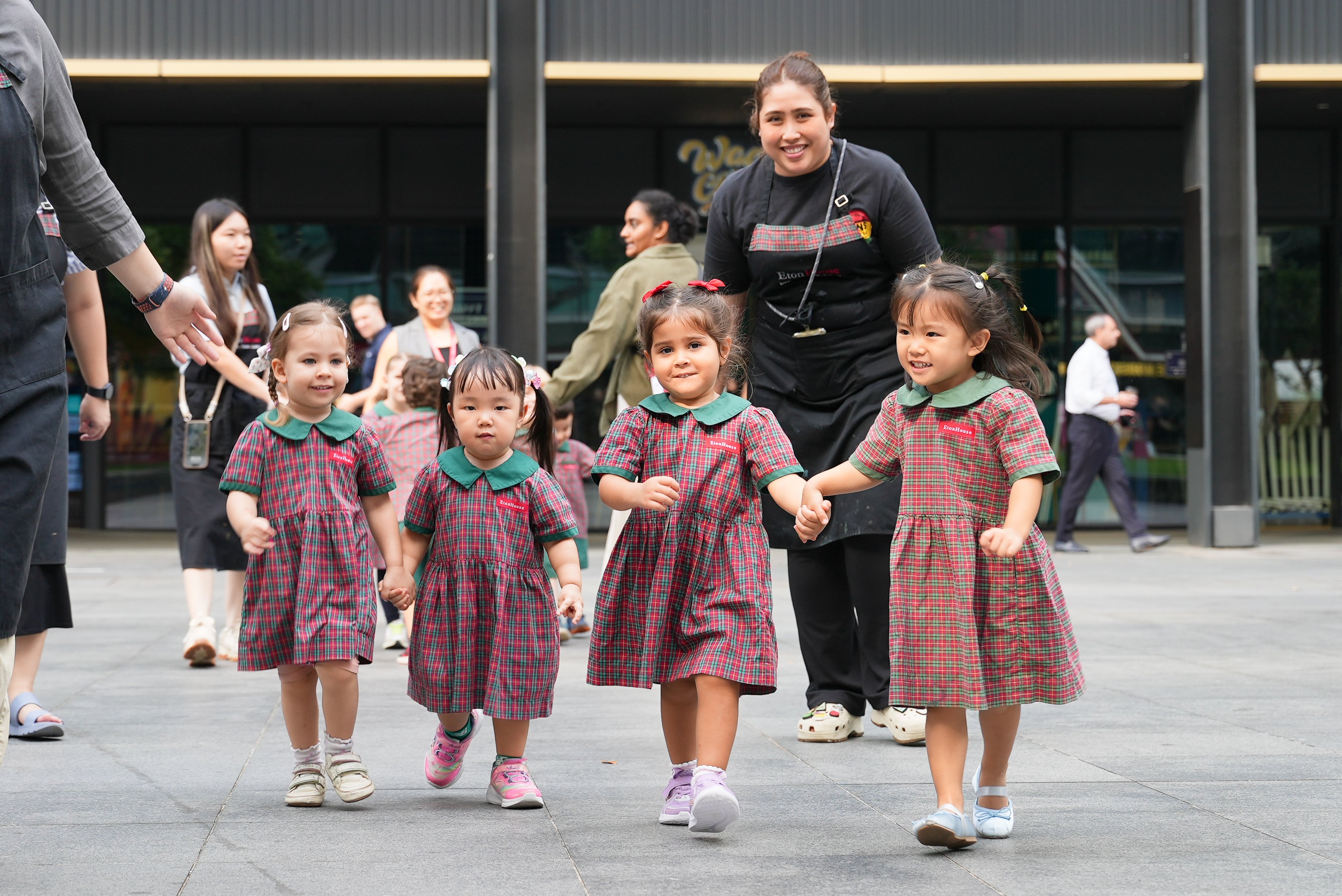
Why do some children move smoothly through daily routines while others resist or struggle?
As we explored in our recent EtonHouse Parenting Webinar, The Rhythm of Care: How Small Moments Build Big Growth, the answer isn’t in the routine itself; it’s in the relationships, tone, and predictability surrounding it.
From infancy through early childhood, children are active meaning-makers, learning deeply through their interactions with adults and the environment. Everyday moments, meals, rest, transitions, and movement are not just tasks to complete, but rich opportunities for nurturing emotional security, independence, and confidence.
Connection comes first, structure comes second
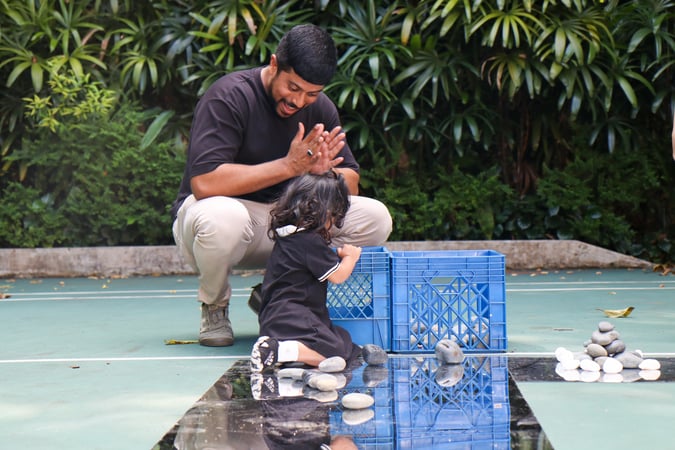
One key insight from our webinar is that routines succeed or struggle not in isolation, but through the relational context they provide. A familiar routine can feel very different for each child, depending on temperament, prior experiences, and the adult’s presence.
For example, a child who receives gentle reminders and reassurance before a transition is more likely to feel secure, whereas another child may only need one prompt. Adults’ tone, pace, and emotional state greatly influence how children experience routines. Calm, grounded, and responsive guidance helps children move through transitions with confidence, while rushed or stressed cues can make the same routine feel unsettling.
Predictability matters, but it doesn’t mean rigidity. Holding consistent structures while adjusting responses to individual cues gives children a sense of safety while nurturing autonomy and problem-solving.
Every day care moments are learning moments
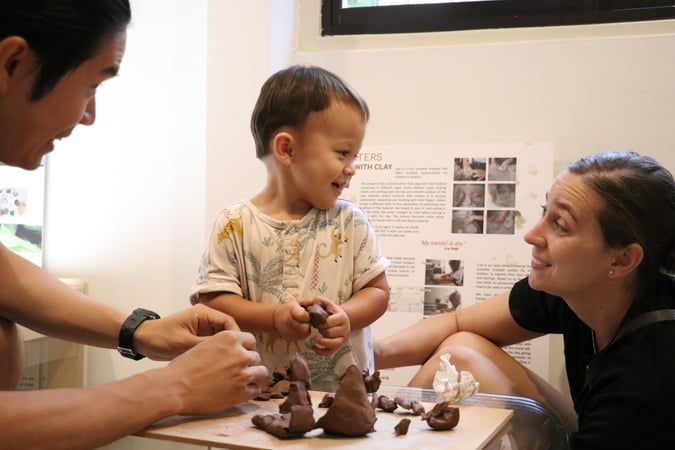
During the webinar, our educators highlighted how everyday routines are actually powerful learning experiences:
- Emotional regulation: A calm presence during nap time teaches children how to manage emotions with support, gradually internalising these skills.
- Agency and independence: Inviting children to participate in transitions, carrying their own belongings, and helping set the table, fosters confidence and a sense of contribution.
- Trust and connection: Responding to children with empathy during meals or handwashing moments reinforces that they are seen, heard, and respected.
Small adjustments in language and approach can make routines feel cooperative rather than controlling. For instance, saying, “Let’s carry the book together” instead of “Hurry up, we’re late” turns a stressful moment into a shared experience, encouraging collaboration while maintaining the desired outcome.
When routines shift, behaviour speaks
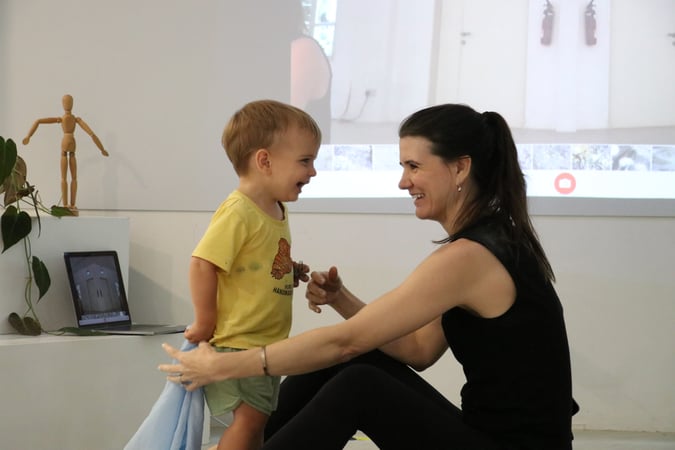
Changes in routine often reveal children’s needs for reassurance and clarity. Hesitation, repeated questions, or emotional outbursts can signal that children are seeking predictability and connection.
Parents and educators can support these moments by:
- Talking through what stays the same and what will change
- Using visual cues or countdowns to signal transitions
- Offering attainable choices to maintain agency
- Reflecting together after routines to acknowledge successes and discuss challenges
Alignment between home and school responses strengthens consistency and builds children’s sense of belonging. Children who experience predictable, respectful, and responsive guidance across environments develop trust, confidence, and adaptability.
Practical strategies for parents
Here are a few simple ways to turn everyday routines into moments of growth:
- Pause, observe, and adjust your response to your child’s cues rather than rushing
- Include children in transitions to give them agency and ownership
- Use calm, positive language to guide cooperation
- Maintain consistent routines while allowing flexibility in timing or approach
- Reflect with your child on what went well and what could be improved
For additional guidance on supporting positive behaviour at home, you may find these resources helpful:
- Raising Children - Encouraging Positive Behaviour
- Child Mind Institute - Managing Problem Behaviour at Home
The power of small moments
Routines are more than a sequence of steps; they are relational exchanges that teach children about trust, self-regulation, and their own competence. Each mealtime, nap time, or transition is an opportunity to strengthen emotional security, nurture independence, and cultivate curiosity.
Book recommendations:
- Parenting from the Inside Out by Daniel J. Siegel & Mary Hartzell
- Peaceful Parent, Happy Kids by Dr Laura Markham
- Playful Parenting by Lawrence J. Cohen, PhD
- The Whole-Brain Child by Daniel J. Siegel & Tina Payne Bryson
- Unconditional Parenting by Alfie Kohn
Discover how EtonHouse’s Reggio Emilia-inspired approach turns everyday routines into moments that nurture your child’s confidence, resilience, and love of learning.